

 Slovenščina
If you love to ski and haven’t yet experienced motorhome skiing, it’s definitely time to try it!
Motorhome skiing has its advantages:
- We can ski in a different location every day and visit many more ski resorts than we otherwise would.
- We can adapt to the weather and chase favorable conditions at ski resorts.
- Even if we book a motorhome in advance, we ultimately have more options. If weather conditions are not ideal for skiing, we can change our plans at any time and head south. If we book an apartment and encounter a week of snowy fog, we don’t have many options. With a motorhome, we are significantly more flexible.
- Since the space is relatively small, we become very connected during our stay, which fosters teamwork.
If you are going motorhome skiing for the first time, we recommend a charming 4- to 5-day trip, which you can watch in the video below.
Route: Ljubljana – Kranjska Gora – Planica and Tamar or Lake Jasna – Schladming – Flachau – Ljubljana
The video does not cover the last day, when we relaxed in Flachau. They have excellent pools and saunas there – Terme Amadé. The saunas are extremely spacious (the largest can accommodate up to 70 people), and various therapies are available every 30 minutes. If you are a sauna enthusiast, we definitely recommend a visit!
When going motorhome skiing, we must ensure that the motorhome is properly equipped and prepared, as there can be a fine line between a very positive and a negative experience. Motorhome prices can vary greatly, and the readiness of the motorhome for winter, i.e., insulation, heating system, double floor, built-in materials, etc., makes a significant difference.
First, a few words about motorhome heating.
Broadly, motorhome heating can be divided into gas and diesel.
GAS (two options):
Truma – forced-air heating
Alde – central heating (water heating, coolant circulates through the motorhome)
DIESEL:
Webasto, Eberspächer… – forced-air heating
If we were to rank heating systems by quality, based on experience, they would be as follows:
- Alde (quietest, no air movement in the vehicle, maintains greater consistency once heated, very reliable)
- Truma (mid-range in terms of noise, heats up faster than Alde, reliable)
- Webasto, Eberspächer (noisier than Truma, not recommended for very low temperatures) – advantage: no need to worry about gas cylinders.
The same order applies to price. The Alde system is the most expensive, Truma is in the middle, and Webasto and Eberspächer are cheaper options.
USEFUL TIPS for using a motorhome in winter:
- With all heating systems, we must not forget the batteries! With dead batteries, none of the systems will work, as electricity is required for air circulation or coolant circulation.
- If we have gas heating, we must ensure we use PROPANE! It has better combustion properties at low temperatures. With butane, you might only be able to use half a cylinder at low temperatures before your heating fails. Based on our skiing experience, a 10kg propane cylinder lasts for 3-4 days.
- It’s wise to take an extra cylinder or two rather than too few, saving you the trouble of searching for gas stations where you can refill them.
- In winter, we must ensure that the temperature in the living area never drops below 0 °C. If this happens, we could lose all our fresh water, as some motorhomes have an automatic valve. If the water in the motorhome freezes, pipes, water filters, pump membranes, etc., can burst. When the temperature inside the vehicle is around 0 °C, never open the taps! They contain Teflon, which can crack at low temperatures. Also, do not start the pump before the vehicle has warmed up.
For motorhomes without a heated wastewater tank, we must also be careful that it does not freeze. - Most heat loss in a motorhome occurs through the cab area. Therefore, it is wise to insulate this part at night. This can be done in several ways. There are external covers, internal covers, but you can achieve a lot by simply creating a barrier between the cab and the living area with a blanket or duvet.
So, in winter, always bring more blankets than you think you’ll need. - If you know there’s a possibility of connecting to the 220V electrical grid somewhere along the way, bring a fan heater. This can serve as a “temperature maintainer,” reducing gas consumption or keeping it as a reserve.
-
If you are heading to ski resorts where temperatures drop below -20 degrees, don’t forget to add anti-freeze to your diesel tank. (Especially if you have diesel heating! =))
-
Don’t forget to add anti-freeze to your windshield washer fluid.
-
If you do not have a heated wastewater tank, keep the wastewater tank open at all times.
Read more
BENIDAYS 4–7 February 2026
BeniDays are the perfect opportunity to buy your new Beni. This promotion includes discounts you won’t find at any other time!
Benimar 2026
Introducing Benimar’s 2026 season updates: compressor refrigerators, Truma diesel heating, and two new semi-integrated layouts for 6 people…

BENIDAYS Nov 13–20, 2025
BeniDays are the perfect chance to get your new Beni. This special promotion comes with discounts you won’t find at any other time!

OPEN DAY
This open house day is mainly for those interested in buying a used motorhome. Before we list them on avto.net, we showcase them during the open house. The motorhomes range in age from a few months to three years. Even if you’re looking to rent or buy a new motorhome, the open house is a great opportunity to see several different layouts in one place and take advantage of a special offer with an extra discount available only during the event.
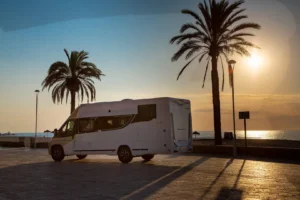
MOTORHOME RENTAL
Renting a motorhome is one of the best ways to explore the world—enjoying all the comforts of home on four wheels. It gives you the freedom to move, stay close to nature, and discover hidden spots you might never visit otherwise. But before you hit the road, it’s important to know the basics: how to choose the right motorhome, what the rental includes, and what to watch out for to ensure a smooth and worry-free experience.

EMPLOYMENT AND COLLABORATIONS
The Avtodomar.si team is looking for new team members and external contractors! If you’re passionate about motorhomes and fit one of the profiles below, or if you offer any of the services we’re looking for as an external contractor and can provide them at our location—or even live nearby—get in touch at: info@avtodomar.si
BENIMAR 2021 NEWS
The year 2020 brought us plenty of surprises 🦠😷. That’s why we were so happy that the 2021 season even got underway! 😃 A little joking, a little serious… In reality, the COVID-19 situation had a very interesting impact on the motorhome industry.
VIDEO INSTRUCTIONS FOR USING A MOTORHOME
Cleaning the toilet cassette? How do you turn on the heating? How do you turn on the hot water? How do you operate the electric bed? What powers the refrigerator and how do you turn it on? How do you switch on the water pump? How do you check the fuses? How do you use the awning? Can a gas cylinder be open while driving? How do you replace a gas cylinder? How do you reset the Truma device?